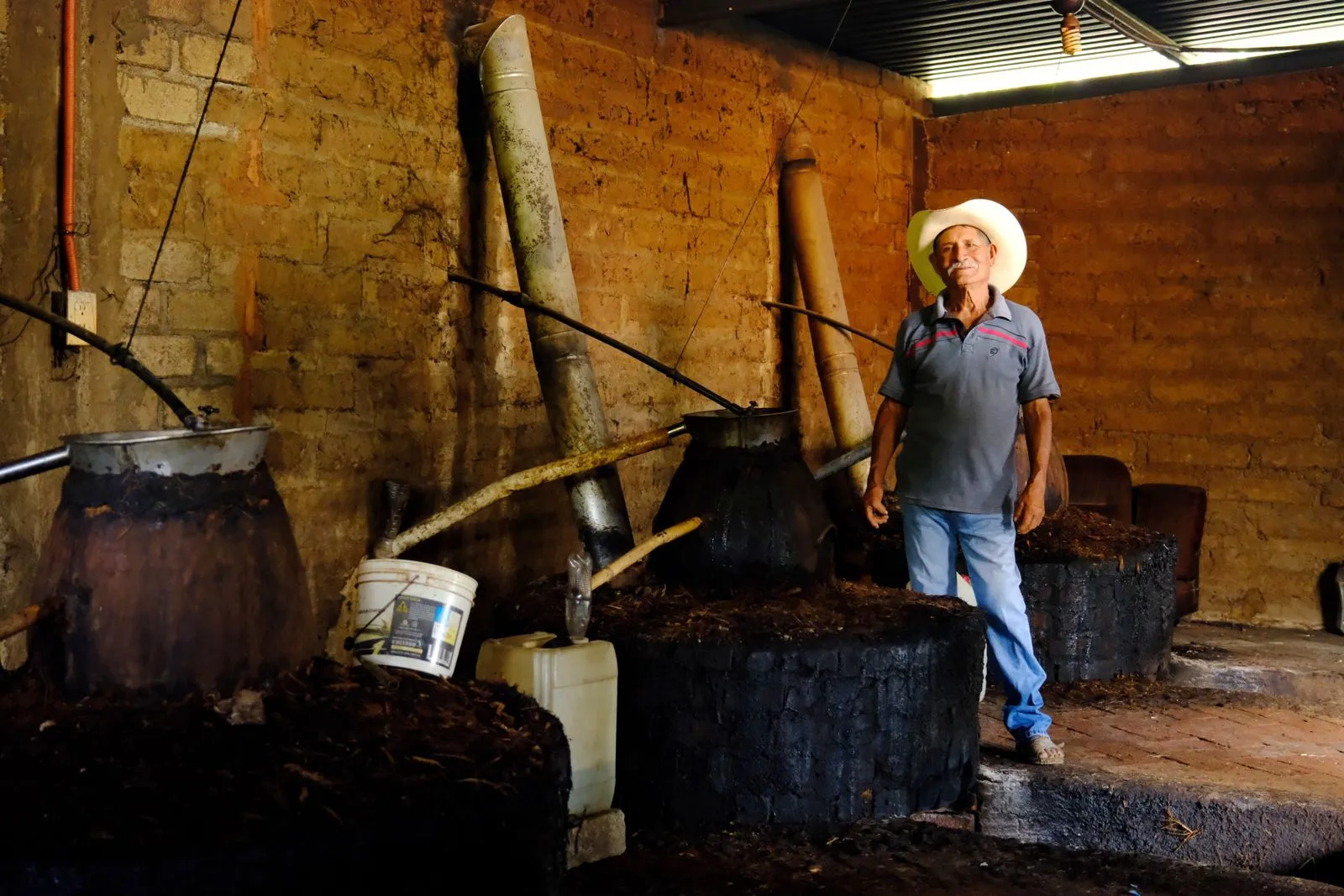
Agave spirits begin as sturdy plants that may take years to mature. Turning them into a drinkable spirit takes several careful steps, and the choices made along the way shape the finished aroma and flavor. While methods vary by agave variety, region, and producer, the basic process follows a familiar path: harvest the mature plant, prepare and cook its core, ferment the extracted sugars, distill the liquid, and bottle the result. Here’s what happens at each stage.
Harvest and Prepare the Agave
When an agave plant is ready for harvest, workers remove its long leaves to expose the central core, often called the piña because it resembles a pineapple. The cores are cut from the plant and transported for processing. Their size and sugar content can vary, so producers select and handle them with care.
Before fermentation, the piñas are cooked to soften their fibers and convert complex carbohydrates into sugars that yeast can use. Producers may cook them in ovens or steam-based equipment, depending on the method. The cooked agave is then crushed or shredded to release its sweet juice. Some producers also use the extracted fibers during fermentation.
Extract Juice and Ferment
Crushing separates the sugary liquid from the cooked agave. The juice may be diluted or combined with water before it enters a fermentation vessel. Yeast consumes the available sugars and produces alcohol along with carbon dioxide and flavor compounds. Fermentation vessels may be made from wood, stainless steel, or other materials.
Fermentation time and conditions influence the spirit’s character. Temperature, yeast selection, and the presence of agave fibers can all affect the aromas that develop. Producers monitor the process and wait until fermentation is complete before distilling. The resulting liquid is low in alcohol compared with the finished spirit, but it carries flavors created from both the agave and fermentation.
Distill and Refine the Spirit
Distillation heats the fermented liquid so alcohol and other volatile compounds vaporize, then cools those vapors back into liquid. Producers may use pot stills, column stills, or a combination. The equipment and distillation approach affect how much of the fermented liquid’s flavor carries into the spirit.
Distillers separate portions of the run to manage aroma, strength, and unwanted compounds. They decide which portion to keep and whether another distillation is needed. The spirit may then be adjusted with water to reach its intended bottling strength. Not every agave spirit is aged; some are bottled after distillation, while others rest or mature in containers that can add color and flavor.
Check, Bottle, and Label
Before bottling, producers assess the spirit for consistency and quality. They may filter it, blend batches, or make final adjustments, depending on the product. Careful handling helps ensure that the aroma, flavor, and appearance meet the producer’s intended profile from bottle to bottle.
The finished spirit is filled into clean bottles, sealed, and labeled with information such as the producer, spirit type, and alcohol content. Packaging marks the end of production, but the choices made at every earlier stage remain apparent in the glass. Looking at how the agave was prepared, fermented, and distilled can help drinkers understand why different bottles taste distinct.
Agave spirits are shaped by a chain of decisions, from how the plant is cooked to how the fermented liquid is distilled and finished. Understanding those steps makes it easier to notice differences in aroma, texture, and flavor when tasting. Explore the process further by asking a distillery about the methods behind its spirits.